
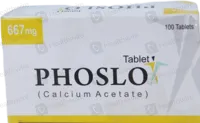
Phoslo (667Mg) 100 Tablets
Phoslo 667mg tablets contain calcium acetate, a phosphate binder used under medical supervision to help control high serum phosphate levels in patients with end-stage renal disease, especially those receiving dialysis.
Original price was: ₨ 585.₨ 567Current price is: ₨ 567.
Overview
Phoslo 667mg Tablets are oral calcium acetate tablets used as a phosphate binder in patients with end-stage renal disease who need control of high blood phosphate levels. Each 667mg tablet of calcium acetate provides a source of calcium ions that bind dietary phosphate in the gastrointestinal tract. The bound phosphate is less available for absorption and is removed through the stool, helping reduce serum phosphorus when used with diet control and medical monitoring.
This medicine is not a general calcium supplement and should not be used casually for bone health, acidity, weakness, or routine mineral replacement. It is intended for patients whose phosphate levels require treatment as part of kidney disease care. Because calcium acetate can increase calcium levels in the blood, therapy requires monitoring of serum calcium, serum phosphate, calcium-phosphate balance, kidney care plan, and other medicines being used.
Benefits
- Helps bind dietary phosphate in the gastrointestinal tract
- Supports reduction of phosphate absorption from food
- Used as part of phosphate control in renal care
- Aluminum-free phosphate-binding option
Key Features
- Calcium acetate 667mg per tablet
- Oral phosphate binder
- Used for hyperphosphatemia in end-stage renal disease
- Usually taken with meals
- Pack size: 100 tablets
- Requires serum calcium and phosphate monitoring
Dosage and How to Use
- How to use: Take by mouth with meals, swallowed with water, exactly as prescribed. Do not crush, split, increase, or reduce the dose unless advised by a healthcare professional.
- Administration: Oral tablet administration with meals and water; laboratory monitoring is required during treatment.
- Recommended dose: Dose must be individualized by a doctor according to serum phosphate and calcium levels. A commonly referenced adult starting regimen for calcium acetate 667mg is 2 tablets with each meal, adjusted gradually with laboratory monitoring.
- Adult dose: Individualized. A commonly referenced starting dose is 2 tablets with each meal, with dose titration based on serum phosphate and calcium levels under medical supervision.
- Pediatric use: Safety and dosing in children should be decided by a pediatric nephrologist or qualified specialist; do not use in children without medical advice.
- Elderly use: Use with caution and clinical monitoring, especially in older patients with kidney disease, calcium imbalance risk, heart disease, or multiple medicines.
- When to take: Usually taken with meals so the medicine can bind phosphate from food.
- With food: Take with meals unless your doctor gives different instructions.
- Maximum daily dose: The maximum daily dose must be set by the treating doctor based on serum phosphate, serum calcium, diet, dialysis status, and tolerance.
- Missed dose: If a meal-time dose is missed, follow the prescriber’s advice. Do not double the next dose unless instructed by a healthcare professional.
- Overdose: Seek urgent medical advice or contact emergency services if too many tablets are taken. Overdose may cause high calcium levels, with symptoms such as nausea, vomiting, constipation, confusion, weakness, thirst, or irregular heartbeat.
Specifications
| Brand | Phoslo |
|---|---|
| Drug class | Phosphate binder; calcium salt |
| Therapeutic category | Renal medicine; phosphate binder for hyperphosphatemia |
| Age group | Adult use when prescribed; pediatric use should be determined by a specialist. |
| Suitable for | Adults with end-stage renal disease and hyperphosphatemia when prescribed and monitored by a doctor. |
Side Effects
Common side effects
- Nausea
- Constipation
- Stomach discomfort
- Loss of appetite
- Itching or rash in some patients
Serious side effects (seek medical help)
- Hypercalcemia
- Severe constipation or persistent vomiting
- Confusion or unusual tiredness
- Muscle weakness
- Irregular heartbeat
- Severe allergic reaction
Allergic reaction
Avoid use if you have known hypersensitivity to calcium acetate or any tablet component. Seek urgent help for swelling, breathing difficulty, severe rash, or other signs of allergic reaction.
Safety and Precautions
- May cause hypercalcemia, especially if taken in excess or combined with other calcium or vitamin D products.
- Requires monitoring of serum calcium and serum phosphate.
- Do not use as a routine calcium supplement unless prescribed.
- Use only under medical supervision in patients with kidney disease.
- Tell your doctor about all medicines, supplements, dialysis schedule, and dietary phosphate intake.
- Avoid additional calcium supplements unless prescribed.
- Dose adjustment may be needed based on blood test results.
- Some oral medicines may need to be taken at a different time to avoid reduced absorption.
When not to use
Do not use if you are allergic to calcium acetate or if you have high blood calcium without medical approval.
Special populations
- Pregnancy: Use during pregnancy only if prescribed by a healthcare professional after assessing benefits, risks, calcium levels, phosphate levels, and kidney disease status.
- Breastfeeding: Use while breastfeeding only on medical advice, with attention to maternal calcium and phosphate monitoring.
- Fertility: No specific fertility guidance can be confirmed from the provided product data; consult a healthcare professional for individualized advice.
- Liver: No specific liver-related warning can be confirmed from the provided product data; patients with significant liver disease should consult their doctor before use.
- Kidney: This medicine is intended for phosphate control in end-stage renal disease but must be used only with specialist supervision and regular monitoring.
- Heart: Use caution in patients with heart disease, arrhythmia risk, vascular calcification risk, or those taking cardiac glycosides such as digoxin, because high calcium levels may be harmful.
- Driving: No specific driving impairment is expected, but avoid driving or operating machinery if you feel weak, confused, dizzy, or unwell.
- Alcohol: No specific alcohol interaction can be confirmed from the provided product data; patients with kidney disease should follow their clinician’s dietary and fluid advice.
Interactions
Drugs:
- Calcium supplements
- Vitamin D or vitamin D analogues
- Digoxin or other cardiac glycosides
- Levothyroxine
- Iron preparations
- Tetracycline antibiotics
- Fluoroquinolone antibiotics
- Other phosphate binders or mineral products
Food:
- Works by binding phosphate from food and is usually taken with meals. Follow the renal diet and phosphate restriction plan recommended by your healthcare team.
Conditions:
- End-stage renal disease requiring close monitoring
- Heart rhythm disorders
- History of calcium-phosphate imbalance
- Conditions associated with tissue or vascular calcification risk
Storage and Disposal
- Store in a cool, dry place away from direct sunlight, heat, and moisture. Keep the container tightly closed.
- Store at room temperature unless the product label states otherwise.
- Keep out of reach and sight of children and pets.
- Do not use expired tablets. Dispose of unused medicine through a pharmacy take-back service where available or according to local medicine disposal guidance.
Disclaimer
Information is for general educational and e-commerce purposes only and is not a substitute for medical advice. Use only as directed by a qualified healthcare professional. Patients with kidney disease require individualized dosing and regular laboratory monitoring.
| Introduction Of Product | Phoslo 667mg Tablets contain calcium acetate, an oral phosphate binder used under medical supervision to help control high phosphate levels in patients with end-stage renal disease. |
|---|---|
| Key Features | Calcium acetate 667mg per tablet, Oral phosphate binder, Used for hyperphosphatemia in end-stage renal disease, Usually taken with meals, Pack size: 100 tablets, Requires serum calcium and phosphate monitoring |
| Key Benefits | Helps bind dietary phosphate in the gastrointestinal tract, Supports reduction of phosphate absorption from food, Used as part of phosphate control in renal care, Aluminum-free phosphate-binding option |
| Primary Uses | Control of hyperphosphatemia in end-stage renal disease, Phosphate management in dialysis patients when prescribed |
| Drug Class | Phosphate binder; calcium salt |
| Indications | Control of hyperphosphatemia in patients with end-stage renal disease. |
| Used For | High blood phosphate levels associated with end-stage renal disease, especially in patients receiving dialysis when prescribed by a healthcare professional. |
| Suitable For | Adults with end-stage renal disease and hyperphosphatemia when prescribed and monitored by a doctor. |
| Who Itu2019s For | Patients with advanced kidney disease who require phosphate-binding therapy as part of a renal treatment plan. |
| How It Works | Calcium acetate releases calcium ions in the gastrointestinal tract. These bind dietary phosphate to form poorly soluble calcium phosphate, reducing phosphate absorption and helping lower serum phosphate levels. |
| Therapeutic Category | Renal medicine; phosphate binder for hyperphosphatemia |
| Recommended Dose | Dose must be individualized by a doctor according to serum phosphate and calcium levels. A commonly referenced adult starting regimen for calcium acetate 667mg is 2 tablets with each meal, adjusted gradually with laboratory monitoring. |
| How to Use | Take by mouth with meals, swallowed with water, exactly as prescribed. Do not crush, split, increase, or reduce the dose unless advised by a healthcare professional. |
| When to Take | Usually taken with meals so the medicine can bind phosphate from food. |
| Maximum Daily Dose | The maximum daily dose must be set by the treating doctor based on serum phosphate, serum calcium, diet, dialysis status, and tolerance. |
| Age Group | Adult use when prescribed; pediatric use should be determined by a specialist. |
| Pediatric Use | Safety and dosing in children should be decided by a pediatric nephrologist or qualified specialist; do not use in children without medical advice. |
| Adult Dose | Individualized. A commonly referenced starting dose is 2 tablets with each meal, with dose titration based on serum phosphate and calcium levels under medical supervision. |
| Elderly Use | Use with caution and clinical monitoring, especially in older patients with kidney disease, calcium imbalance risk, heart disease, or multiple medicines. |
| Missed Dose | If a meal-time dose is missed, follow the prescriber’s advice. Do not double the next dose unless instructed by a healthcare professional. |
| Overdose Instructions | Seek urgent medical advice or contact emergency services if too many tablets are taken. Overdose may cause high calcium levels, with symptoms such as nausea, vomiting, constipation, confusion, weakness, thirst, or irregular heartbeat. |
| Before or After Food | Take with meals unless your doctor gives different instructions. |
| Administration Instructions | Oral tablet administration with meals and water; laboratory monitoring is required during treatment. |
| Warnings | May cause hypercalcemia, especially if taken in excess or combined with other calcium or vitamin D products., Requires monitoring of serum calcium and serum phosphate., Do not use as a routine calcium supplement unless prescribed., Use only under medical supervision in patients with kidney disease. |
| Precautions | Tell your doctor about all medicines, supplements, dialysis schedule, and dietary phosphate intake., Avoid additional calcium supplements unless prescribed., Dose adjustment may be needed based on blood test results., Some oral medicines may need to be taken at a different time to avoid reduced absorption. |
| Contraindications | Do not use in patients with hypercalcemia unless specifically directed by a healthcare professional. |
| When Not to Use | Do not use if you are allergic to calcium acetate or if you have high blood calcium without medical approval. |
| Allergy Warning | Avoid use if you have known hypersensitivity to calcium acetate or any tablet component. Seek urgent help for swelling, breathing difficulty, severe rash, or other signs of allergic reaction. |
| Common Side Effects | Nausea, Constipation, Stomach discomfort, Loss of appetite, Itching or rash in some patients |
| Serious Side Effects | Hypercalcemia, Severe constipation or persistent vomiting, Confusion or unusual tiredness, Muscle weakness, Irregular heartbeat, Severe allergic reaction |
| Pregnancy Warning | Use during pregnancy only if prescribed by a healthcare professional after assessing benefits, risks, calcium levels, phosphate levels, and kidney disease status. |
| Breastfeeding Warning | Use while breastfeeding only on medical advice, with attention to maternal calcium and phosphate monitoring. |
| Fertility Warning | No specific fertility guidance can be confirmed from the provided product data; consult a healthcare professional for individualized advice. |
| Liver Warning | No specific liver-related warning can be confirmed from the provided product data; patients with significant liver disease should consult their doctor before use. |
| Kidney Warning | This medicine is intended for phosphate control in end-stage renal disease but must be used only with specialist supervision and regular monitoring. |
| Heart Warning | Use caution in patients with heart disease, arrhythmia risk, vascular calcification risk, or those taking cardiac glycosides such as digoxin, because high calcium levels may be harmful. |
| Driving or Machine Use Warning | No specific driving impairment is expected, but avoid driving or operating machinery if you feel weak, confused, dizzy, or unwell. |
| Alcohol Warning | No specific alcohol interaction can be confirmed from the provided product data; patients with kidney disease should follow their clinician’s dietary and fluid advice. |
| Drug Interactions | Calcium supplements, Vitamin D or vitamin D analogues, Digoxin or other cardiac glycosides, Levothyroxine, Iron preparations, Tetracycline antibiotics, Fluoroquinolone antibiotics, Other phosphate binders or mineral products |
| Food Interactions | Works by binding phosphate from food and is usually taken with meals. Follow the renal diet and phosphate restriction plan recommended by your healthcare team. |
| Disease Interactions | Hypercalcemia, End-stage renal disease requiring close monitoring, Heart rhythm disorders, History of calcium-phosphate imbalance, Conditions associated with tissue or vascular calcification risk |
| Storage Instructions | Store in a cool, dry place away from direct sunlight, heat, and moisture. Keep the container tightly closed. |
| Disposal Instructions | Do not use expired tablets. Dispose of unused medicine through a pharmacy take-back service where available or according to local medicine disposal guidance. |
| Keep Away From Children | Keep out of reach and sight of children and pets. |
| Temperature Requirement | Store at room temperature unless the product label states otherwise. |
| Disclaimer | Information is for general educational and e-commerce purposes only and is not a substitute for medical advice. Use only as directed by a qualified healthcare professional. Patients with kidney disease require individualized dosing and regular laboratory monitoring. |
All In One Medicine policy reference: Shipping Policy | Return Policy | Refund Policy
This product may be fulfilled through the source shown below. Source fees, delivery coverage, payment limits, return windows, and refund routes can be stricter than ordinary ecommerce because medicines, prescriptions, cold-chain items, baby products, hygiene goods, and opened products have safety limits.
Shipping & Delivery - Health Wire
Delivery, return, and refund handling
- Healthwire routes medicine orders to the dispensing partner pharmacy that accepts the order.
- Services are restricted to selected territories within Pakistan.
- Prescription medicine ordering is restricted to customers aged 18 or older.
- Delivery time, courier choice, delivery fee, and serviceability are set by the dispensing partner pharmacy and confirmed at order time.
- Healthwire does not publish one unified shipping or return policy for all pharmacy orders.
- The return and refund terms for a medicine order are the actual dispensing partner pharmacy terms.
- Standard pharmacy restrictions still apply to opened, used, prescription, hygiene-sensitive, and temperature-sensitive products.
Related products
-
From: DVAGO
Venticort Dpi Capsules 200Mg (1 Box = 3 Strips) (1 Strip = 10 Capsules)
Original price was: ₨ 536.₨ 510Current price is: ₨ 510.Add to cart -
From: DVAGO
Peridots Gelatin Capsules (1 Strip = 10 Capsules)
Original price was: ₨ 230.₨ 219Current price is: ₨ 219.Add to cart -
From: DVAGO
Relnorm Tablets 25Mg (1 Strip = 10 Tablets)
Original price was: ₨ 190.₨ 181Current price is: ₨ 181.Add to cart -
-
From: DVAGO
Brandit Tablets 250Mg (1 Box = 10 Tablets)
Original price was: ₨ 575.₨ 546Current price is: ₨ 546.Add to cart



Reviews
There are no reviews yet.